

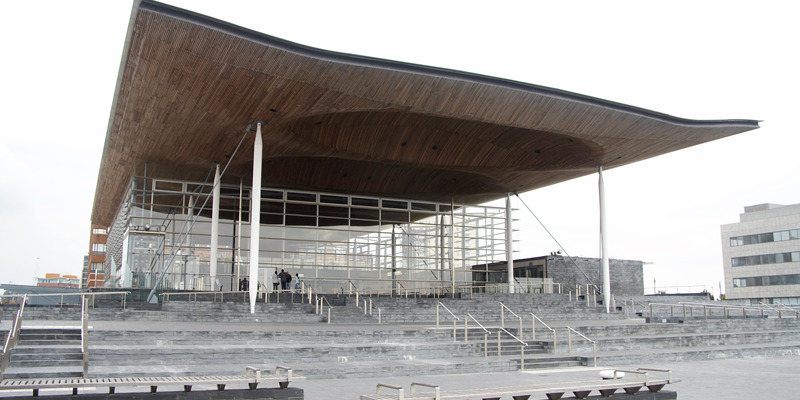
In a push to “create a Welsh Parliament that can better serve people in Wales”, the Senedd Cymru has introduced big changes to how people will vote and be represented, ahead of the 2026 Senedd election. These changes, covering everything from constituency boundaries to the electoral process, are set to significantly reshape the Senedd.
Why the need for change?
Since the Senedd opened its doors in 1999, much has changed in Wales, however, in contrast, little has changed in how its parliament operates. This has led to concerns that the current size of the Senedd does not reflect the changing times and, as a result, impacts its ability to effectively hold the Welsh Government to account.
Further concerns point to the Welsh electoral process. Its additional member system, which combines a ‘first-past-the-post’ (FPTP) method with a proportional one, complicates the process of voting and has sparked discussions over its suitability for electing a Senedd with a larger membership. For some time, ‘First Past the Post’ has been a topic of contention in Wales, and, as more and more people move away from mainstream parties, the pressure for change has grown.
The 2026 election in Wales is set to introduce a political shift in the country as smaller parties, such as Reform UK, see increasing support in the British nation, at the expense of Labour. Whilst the right-wing populist party did not elect any Welsh seats in the 2024 UK General Election, it received 16.9% of the vote.
The introduction of a fully proportional electoral system would allow smaller parties to have greater representation in the Senedd. This is not only the case for Reform, but also for Plaid Cymru and the Welsh Liberal Democrats, which received 14.8% and 6.5% of the vote in 2024, respectively.
The Senedd Cymru (Members and Elections) Act 2024
On the 24th of June 2024, the Senedd Cymru (Members and Elections) Act 2024 came into effect, leading major reforms in the Welsh political system.
According to the act, a proportional voting system will replace ‘first past the post’ in all future elections, starting with the 2026 election. When going to the polls, instead of selecting one candidate to represent the local constituency and a political party to represent a Welsh region, the voter will now only have to select one political party or independent candidate to represent the constituency. Candidates are then elected on a proportional basis, based on the number of votes gained.
Further changes regard constituency boundaries and representation. Previously, 40 constituency areas were contested during Senedd elections. The boundaries seen during the 2024 general election reduced this number down to 32. For the 2026 election, the number of constituencies will once again decrease, with each constituency being paired with another to create 16 constituencies. These will then elect six members of the Senedd each.
This higher number of elected officials per constituency translates into an increase in the number of Senedd members, from 60 to 96. Increasing the size of the Senedd is a key element of the Senedd Cymru bill, which aims to build a more effective legislature for, and on behalf of, the people of Wales. This will enhance the parliament’s ability to scrutinise, oversee and improve policy, legislation, spending and taxation.
Additional changes also include:
- Senedd elections are to be held every 4, rather than 5, years, from 2026 onwards;
- All candidates for Senedd and Members of the Senedd need to be residents in Wales by law;
- Senedd members are now allowed to elect a second Deputy Presiding Officer;
- The limit on the number of appointed Welsh Ministers has been increased from 12 to 19.
Senedd Constituency boundary changes
After the Senedd Cymru (Members and Elections) Act 2024 was introduced, the Democracy and Boundary Commission Cymru had one task: to publish a report setting out its recommendations on Senedd Constituency boundaries to inform decisions to be made ahead of the 2026 Senedd election.
The process for changing the Senedd Constituency boundaries has been no easy task. The Commission was made responsible for:
- Combining and creating the 16 areas of the Senedd;
- Proposing the names of the new Senedd constituencies;
- Designating the title of borough or county to each constituency.
For this they have to take into account local government boundaries, special geographical considerations and any local ties which may be relevant for consideration.
So far, this process has been one of proposals and consultation periods. At the start of the statutory process the Commission prepared and published, in September, its initial proposals and an accompanying report. Following its publication, an initial consultation period took place, between 3 September and 30 September 2024, in which members of the public, groups, and organisations had the opportunity to submit written responses to the initial proposals.
This was followed by a revised proposal released last December, in which the Commission considered arguments made for and against the initial report and revised accordingly. The second publication set out the following 16 constituencies:
- Bangor Conwy Môn
- Clwyd
- Fflint Wrecsam
- Gwynedd Maldwyn
- Ceredigion Penfro
- Sir Gâr
- Gorllewin Abertawe Gŵyr
- De Powys Tawe Nedd
- Afan Ogwr Rhondda
- Merthyr Cynon Taf
- Blaenau Gwent Caerffili Rhymni
- Mynwy Torfaen
- Casnewydd Islwyn
- De-ddwyrain Caerdydd Penarth
- Gogledd-orllewin Caerdydd
- Pen-y-bont Bro Morgannwg
Out of the 16 new constituency names, only four were also given English names. The high number of Welsh only constituency names is due to an effort from the Welsh government to promote the language.
The four weeks which followed the revised proposals were ones of a second consultation period. As of today, the Commission has been carefully considering responses to the consultation and is yet to announce a final decision.
What is next?
Work is in progress to ensure that the changes introduced by the Senedd Cymru (Members and Elections) Act are in place ready for the 2026 Senedd election.
The Welsh Democracy and Boundary Commission is now responsible for submitting a formal report on the constituency boundary changes to Welsh ministers, by April 1st 2025. These need to then be presented to the Senedd thereafter at the earliest convenience. Welsh Ministers must make regulations which can put into effect the decisions set out in the Commission’s final report. Once this process is complete, changes should be implemented within 14 weeks.
Additionally, the development of a diversity and inclusion guidance report for political parties is underway and is set to be published in spring 2025 and encourage parties to consider actions to enhance diversity and inclusion amongst their circles.
The Senedd Cymru Act of 2024 represents a new Senedd. This is set to change voting patterns in Wales and spark wider discussions on representation and elections across the UK.
Just a few months after the bill was approved, a symbolic win for electoral reform took place in Westminster. On the 3rd of December of 2024, MPs voted in favour of introducing a proportional representation electoral system. Although this will most certainly not change the law, as of yet, it is a sign of change for the future of the UK.
The Welsh Government believes that this is a ‘once-in-a-generation’ reform. However, the true impact of these reforms are to be seen after the 2026 Senedd election.