



The Brief
As one of the largest professional bodies for counsellors and psychotherapists in the UK, the National Counselling & Psychotherapy Society (NCPS) is committed to safeguarding public trust and ensuring high-quality and ethical therapy.
NCPS advocates for accessible, timely, and relational mental health support. This is why, through collaboration with policymakers, healthcare providers, and local stakeholders, they seek to highlight the value of counselling and psychotherapy as key components of the nation’s mental health strategy.
The organisation was looking to create a clear picture of the gaps in mental health provision in England and Scotland and highlight where additional support could make a real difference. This is where Polimapper stepped in.
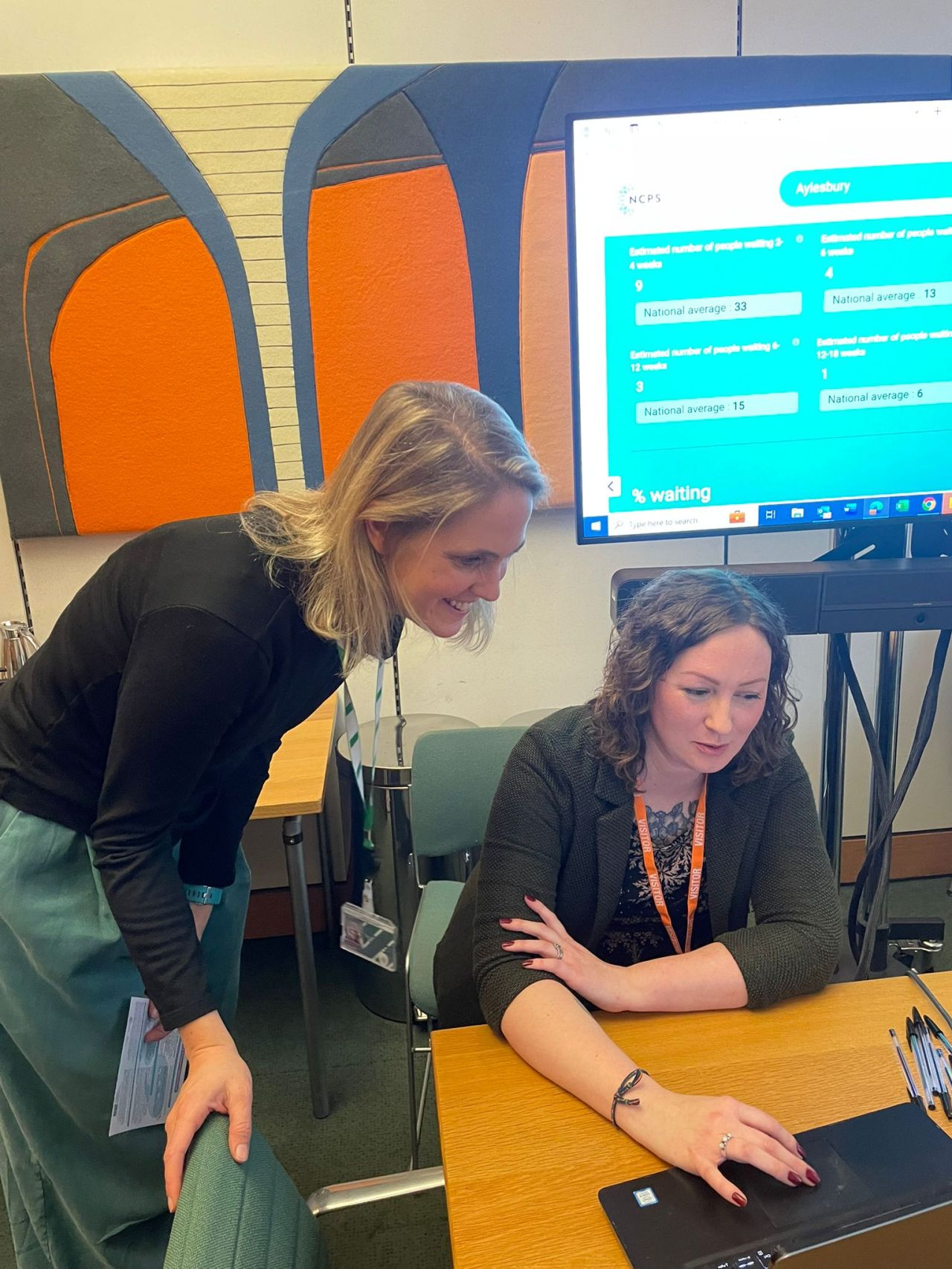
Image: Laura Kyrke-Smith MP using Polimapper
Meg Moss, Head of Public Affairs & Advocacy, at NCPS: “Thank you so much for your help getting this put together so quickly. You are doing great work.”
The Solution
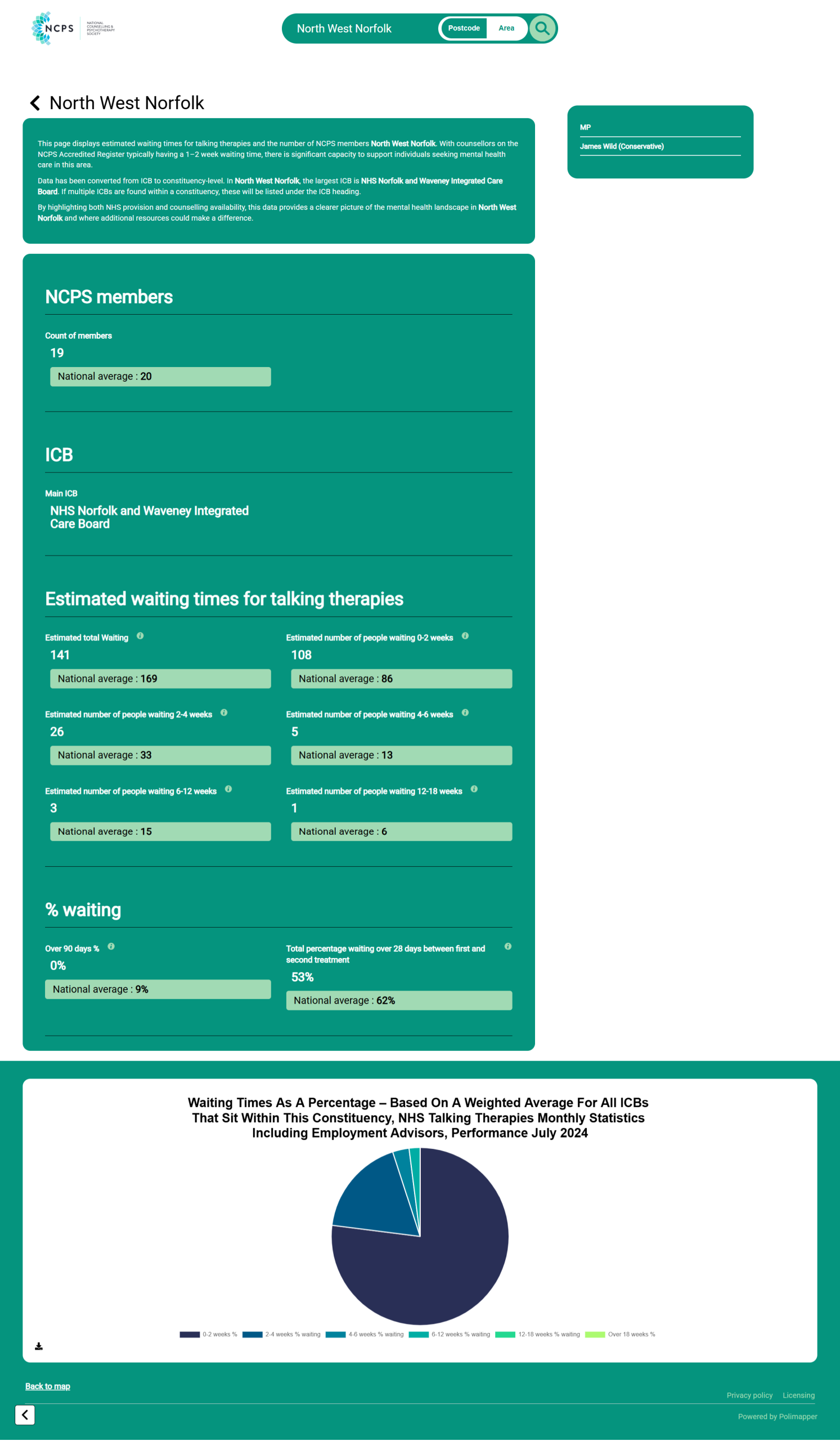
To build a snapshot of waiting times and counselling capacity across England and Scotland on a Westminster and Holyrood constituency level, a combination of NHS waiting times data alongside NCPS Annual Member Survey figures was used.
Talking and psychological therapy waiting times data by Integrated Care Board was collected from ‘NHS Waiting Times’ statistical datasets. This data was then converted to fit constituency boundaries by the Polimapper team.
Each constituency was mapped against a health board, and where a constituency sat across more than one board, the one with the largest share of the constituency was used.
By mapping constituencies to their relevant local health board, an estimated value was calculated based on population distribution. This methodology does rely on an even distribution of populations, but represents the best modelling available for constituency level statistics.
Outcome
Polimapper has been a valuable tool for the NCPS, helping visualise counselling capacity on a geographical level and present the data in a clear, accessible format.
Whether it be in Parliamentary events, liaising with MPs, or in meetings with MSPs, the visualisations always came in handy, prompting relevant conversations and placing the issues at hand centre-stage.