

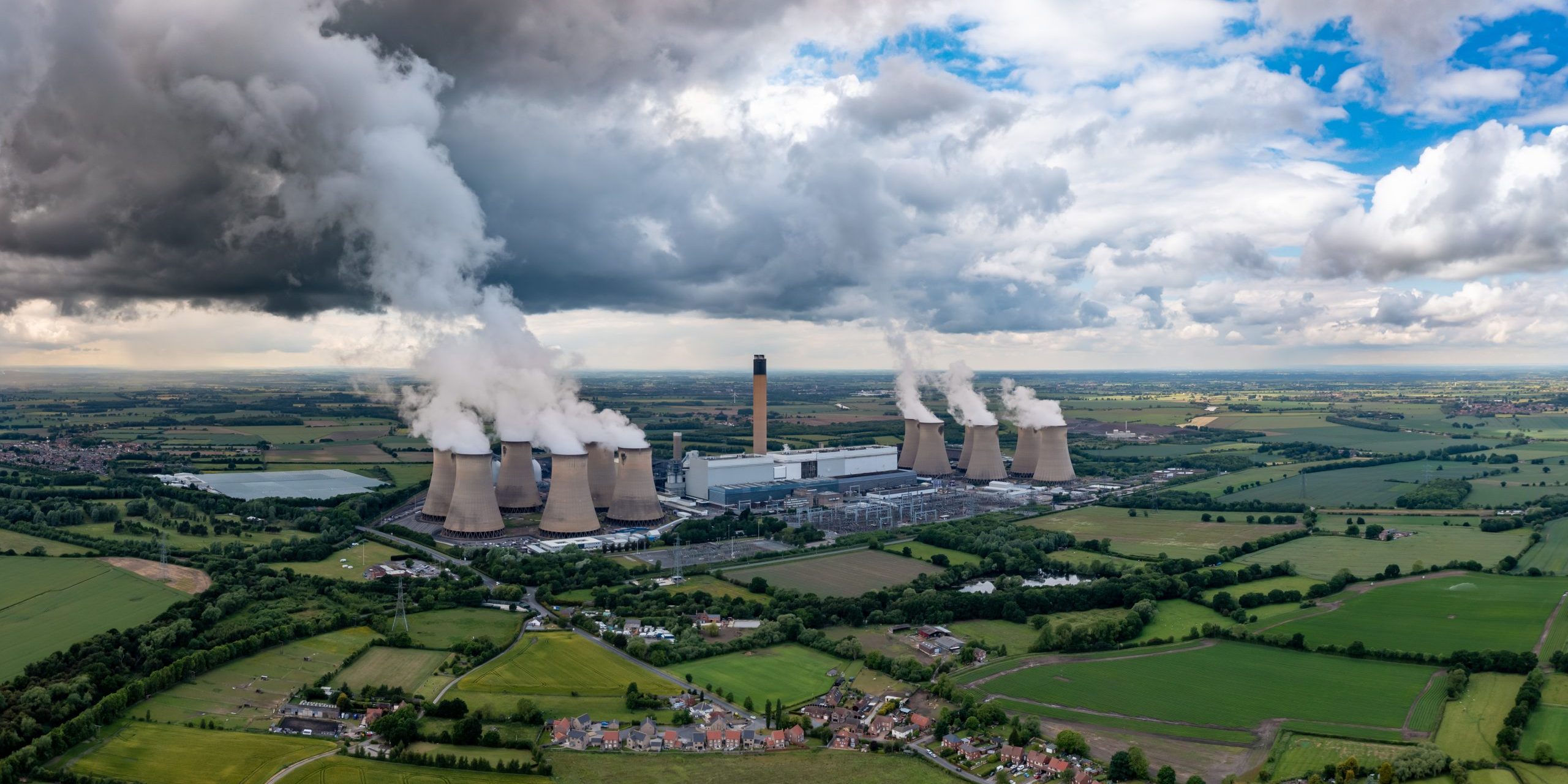
As the Climate Change Committee released its Seventh Carbon Budget, the latest carbon emissions data reveals that overall emissions in the UK saw a decrease of 5% in 2022, from the year before.
The data published by the Department for Energy Security and Net Zero showed that of the 361 local authorities of the UK in 2022, 96% of them saw a decrease in their overall emissions. Within this, the transport sector had the highest share of greenhouse gas emissions in 55% of authorities, whilst the domestic sector prevailed in 21% of them and the agriculture sector in 14%.
In Greenhouse gas emissions, Neath Port Talbot, in Wales, topped the charts with a staggering 6,275.28 kt CO2e (44.14 tCO2e per person). Conversely, the Isles of Scilly boasted the lowest total emissions at just 8.95 kt CO2e. The London Borough of Hackney had the lowest per capita emissions (2.18 tCO2e), while the City of London reported the highest emissions per square kilometer (190.05 kt CO2e per km2).
Regionally, higher emissions cluster around industrial zones like Teesside and North Lincolnshire. Urban areas generally show lower per capita emissions but higher density, especially in London. Rural areas, particularly in Scotland and Wales, often see higher per capita emissions due to factors like transport and housing.
Geodata context
On the 26th of February 2025, the Climate Change Committee released its most recent recommendations on the Seventh Carbon Budget. According to the CCC, the government should impose a limit of 535 MtCO2e on the UK’s greenhouse gas emissions over the five year period 2038-2042. This is a target which they consider to be ambitious but necessary.
Dhara Vyas, chief executive of Energy UK: “The Climate Change Committee’s (CCC) analysis clearly shows that reducing emissions will lead to more affordable and secure energy. The increase in the price cap this April is again a stark reminder that Great Britain should not remain dependent on volatile international gas prices. Investing in clean, homegrown energy is the best route to lower bills and ensure long-term energy security.
Jess Ralston, energy analyst at the Energy and Climate Intelligence Unit: “Unless we stop adding greenhouse gas emissions to the atmosphere, climate change will worsen and so will the extreme weather events that come with it, like the recent wildfires in LA. Net zero is a scientific concept to ensure that the UK does its bit to limit those emissions, and so global warming. The Climate Change Act and its carbon budgets are milestones along the road to net zero, with the legislation in the UK leading the rest of the world and setting an example that other countries have followed.”
Smith Mordak, chief executive officer of UKGBC: “As the CCC’s latest budget sets out, we now need key policy levers to be pulled, including, making electricity cheaper, better building regulations to ensure we’re not constructing buildings that will need to be retrofitted before 2050, and a clear and committed phase out date for fossil heating.”
About the map
The map below shows total, per capita, and per Km2 emissions for greenhouse gas, carbon dioxide, methane and nitrous oxide for the year of 2022. To explore detailed figures for your area, double-click on the map or click here to view the full-page version.